Understanding OEM Skincare Manufacturing: A Complete Guide
So you’ve got a killer skincare idea. You know exactly what your serum should do, how it should smell, and the kind of glow it’ll give your customers.
But there’s one big problem: you don’t own a factory. And honestly? You don’t want to.
That’s where OEM skincare manufacturing comes in. It’s the behind‑the‑scenes hero that turns your dream formula into a real product you can sell. And no, it’s not as complicated as it sounds.
Let’s walk through everything you need to know — in plain English, no industry jargon — so you can find the right partner and launch with confidence.
What Exactly Is OEM (and Why Should You Care)?
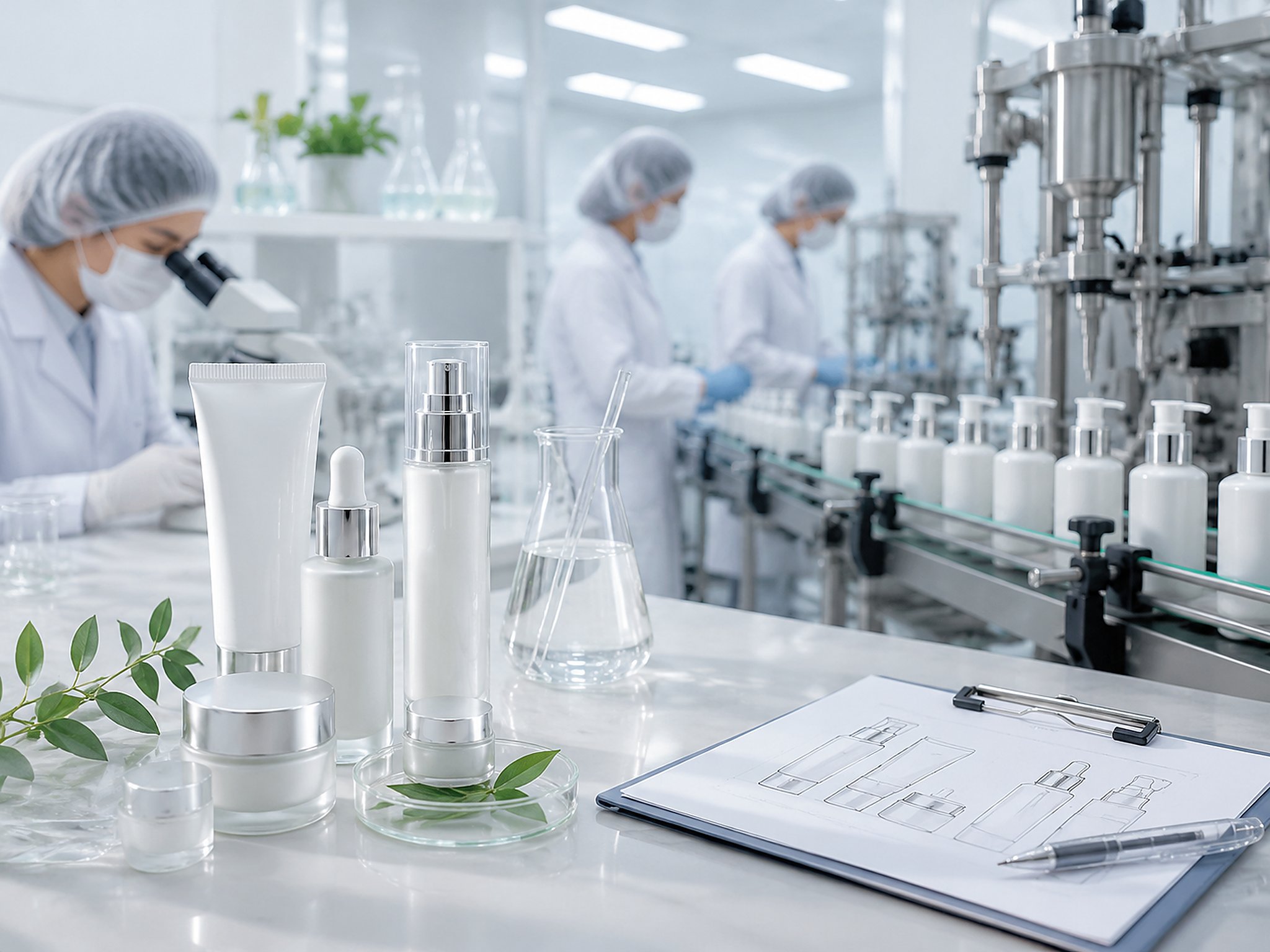
OEM stands for Original Equipment Manufacturing. In skincare, it means you hire a factory to make your products for you, using your own formulas (or their pre‑made “private label” formulas with your branding).
Think of it like this: you’re the chef with a secret recipe, and the OEM is your kitchen. They have the pots, pans, and staff — you just tell them what to cook and how you want it served.
The beauty? You get professional‑grade production without spending millions on machines, cleanrooms, or quality labs.
Why Indie Brands Are Flocking to OEM
- • 💰 Lower startup costs – No need to buy equipment or rent a production facility. You pay only for what you produce.
- • ⚡ Speed to market – Experienced OEMs can turn around your first batch in weeks, not years.
- • 🔬 Expertise on tap – They know about preservatives, stability testing, and packaging compatibility so you don’t have to learn the hard way.
- • 📈 Scalability – Start with 1,000 units, then scale to 50,000 when your brand blows up (and it will!).
The OEM Process: From Idea to Shelf in 6 Steps
Here’s the typical journey you’ll go through with a good OEM partner:
1. Concept & Brief
You tell them your vision: target skin concern, texture preference, fragrance, hero ingredients, and price point.
2. Formula Development
The lab team whips up a prototype based on your brief. You can either use their existing base (faster) or request a custom blend (more unique).
3. Sample Round
You receive small samples to test at home. Wear them, patch‑test them, and see if they deliver the results you promised.
4. Packaging Selection
Choose your bottles, jars, pumps, and labels. The OEM will often have a catalog of stock packaging, or they can order custom molds for that luxury feel.
5. Production Run
Once everything is approved, they order raw materials and start manufacturing. This stage includes mixing, filling, sealing, and labeling.
6. Quality Control
Every batch is tested for microbial safety, pH, viscosity, and stability. Only after passing do they ship your finished goods to your warehouse or 3PL.
How to Choose the RIGHT OEM Partner (Don’t Rush This!)
Not all factories are created equal. Here are the make‑or‑break factors to check before signing anything:
- • Minimum Order Quantities (MOQs) – Some require 10,000 units per SKU, others are startup‑friendly with MOQs as low as 500. Match with your budget and sales forecast.
- • Certifications – Look for GMP (Good Manufacturing Practices), ISO 22716, and FDA registration if you sell in the US. These are non‑negotiable for safety and credibility.
- • Communication Style – Do they reply within 24 hours? Are they transparent about costs and timelines? Trust your gut here — a bad communicator will make your life hell.
- • R&D Support – Can they help tweak textures or add trendy ingredients (like niacinamide or bakuchiol)? The best OEMs act as creative partners, not just order‑takers.
- • References – Ask for client testimonials or case studies. A reputable factory will happily share past work (anonymized if needed).
4 Mistakes to Avoid When You’re New to OEM
❌ Going with the lowest price – Cheap often means cutting corners on raw materials or skipping stability tests. You’ll pay more in returns and bad reviews.
❌ Skipping the stability test – Your cream might separate or smell weird after three months. Always insist on accelerated stability and preservative‑challenge tests.
❌ Not getting everything in writing – Your contract should clearly state: MOQ, lead time, payment terms, ownership of formula, and how defects are handled.
❌ Forgetting about packaging compatibility – Some ingredients react with plastic or glass. Your OEM should test the formula inside the chosen container before full production.
Private Label vs. Custom Formula – What’s the Difference?
- • Private Label – You pick from the OEM’s existing menu of ready‑made formulas (e.g., “Vitamin C Serum #3”) and just add your own label. Fast, cheap, but not unique.
- • Custom / Full‑OEM – You collaborate with their chemists to create a one‑of‑a‑kind formula that belongs only to you. Takes longer and costs more, but builds true brand distinction.
Which one is right for you?
- • If you’re testing the market → start with private label.
- • If you’re building a legacy brand → go custom from day one.
The Future of OEM Skincare – What’s Trending
- • Small‑batch, agile production – Brands are moving away from huge bulk orders to “micro‑manufacturing” that allows faster product iteration.
- • Clean & green manufacturing – OEMs are investing in solar energy, water recycling, and biodegradable packaging to meet consumer demand.
- • AI‑assisted formulation – Some labs now use AI to predict ingredient interactions, reducing trial‑and‑error time.
- • Direct‑to‑consumer fulfilment – Many OEMs now offer kitting and drop‑shipping services, so you can launch with zero inventory headaches.
Ready to Find Your OEM Match?
We know the search can feel overwhelming — there are hundreds of factories in Korea, China, the US, and Europe. That’s exactly why we exist.
At Sunyant, we’ve vetted over 50 trusted OEM partners across Asia and North America. We hand‑pick factories based on your MOQ, formulation needs, and budget, then handle all the back‑and‑forth so you can focus on branding and marketing.
🎁 Here’s our gift to you:
Book a free 30‑minute consultation with our sourcing team, and we’ll send you a shortlist of 3 qualified manufacturers with price estimates and lead times — zero obligation.
Interested in our products?
Let's discuss how we can help your brand grow — formulation, OEM/ODM, and compliance, all in one place.
Send Inquiry